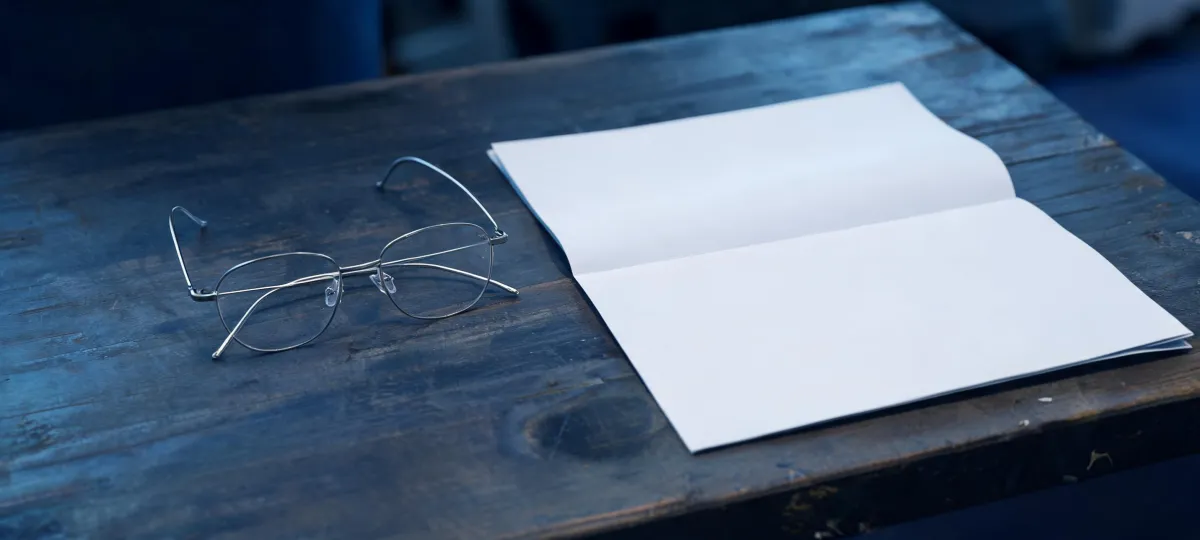
If you're sourcing frames for a shop that sells to families, memory metal frames are worth the extra cost in exactly two situations: kids' eyewear, and adult frames you expect to get handled roughly. Everywhere else, you're paying a premium for flexibility your customer probably won't test.
Bottom line: source memory metal where flexibility prevents returns—not everywhere a vendor puts the word "premium" on the box.
That's the short answer. What follows is why I believe it, and where I'd tell you to buy something else.
I handle purchasing for a small eyewear chain—four locations, about 60 employees. I took over frame buying in 2020 after our previous buyer left, and I've been signing off on assortments since. I report to both our operations lead and our finance manager, which means every order I place has to survive two very different kinds of scrutiny. In 2025 we placed around 45 frame purchase orders across 11 vendors. Memory metal made up maybe 30% of our kids' assortment—25%, honestly, I'd have to pull the report, but it's in that range.
Why I stopped treating "flexible" as a single category
Here's something most vendors won't tell you: "memory metal" and "flexible" are not the same claim. Plenty of frames marketed as memory metal only use the shape-memory alloy in the temples. The front—bridge, rims—is a different metal or a coated alloy that bends slightly and then stays bent. That's still a usable frame. But it isn't what a parent hears when they read "flexible," and it definitely isn't what they expect when a child sits on the thing.
So when I evaluate flexible glasses frames for kids now, the first question I ask is simple: is the whole front flexible, or just the arms? The answer changes which price bracket I'm willing to pay.
The part nobody tells you about kids' frames
It took me about three years and a few hundred frame orders to understand that flexibility isn't what most parents are actually paying for—fit and price are. People assume flexible frames cut down on replacements because they don't break. But when I went through our return and reorder data, most kids' frames came back because the child outgrew them or the family lost them. Not because they cracked.
What I mean is that durability only buys you a replacement cycle if the frame lasts long enough to be replaced for fit instead of failure—and for a fast-growing kid, that window is often just 12 to 18 months anyway. If the frame survives that long, the flexibility did its job. If the kid outgrows it in 10 months, that durable frame never really gets tested.
What flexible frames actually cost
This is the honest part. Memory metal frames run more than basic plastic or TR90 at basically every volume tier. From the quotes we collected in early 2026, the gap was often 20-40% per frame depending on the alloy and finish—verify current pricing, because this number moves.
For a kids' line where a frame might see only a year of use, that premium has to earn its keep. In my experience, what it buys is fewer hinge failures and fewer "it snapped at the temple" complaints. Whether that's worth 20-40% depends on your return policy and your customers.
Where flexible frames earn their cost
Two places, for us:
- Kids flexible glasses frames for roughly the 4-10 age range, where rough handling is the baseline.
- Flexible glasses frames for adults who buy one pair and expect it to survive being jammed into a bag.
Outside those, memory metal glasses frames are mostly a nice-to-have. For adult fashion frames that live in a hard case, the flexibility rarely gets used, and you're paying for a property nobody tests. If you've ever had a customer bring back a frame that bent the wrong way and stayed that way, you know exactly why I ask about hinges before I ask about price.
One more note on volume: keep your colorways tight. We tried eight accent colors on one kids' line and ended up with dead stock on three of them. Kids' frames move on fit and price far more than color, and a wide palette just spreads your MOQ across SKUs that won't all sell.
What I check before I place a memory metal order
Three things, in this order:
- Where the alloy actually is. Ask the supplier directly—full-frame memory alloy, or temples only? Get it in writing.
- Hinge construction. The hinge is usually where these fail, not the flexible section. A memory metal frame with a cheap hinge is just a flexible frame that breaks at the joint.
- Sample testing. We bend and twist samples before ordering. If a supplier can't or won't send samples, that tells me what I need to know about the ongoing relationship, too.
If you're doing memory metal frames sourcing for the first time, the B2B support a supplier offers matters as much as the frame itself. Someone who can explain the alloy, confirm the front-versus-temple construction, and give a straight answer on MOQ is worth more than a slightly cheaper quote from someone who won't.
When I'd tell you not to bother
If your customers replace frames every year regardless, or you're sourcing for a price-sensitive segment where a snapped frame is cheaper to replace than to prevent, memory metal is probably the wrong buy. I also wouldn't lead with it for high-prescription lenses—the frame's flexibility does nothing for lens weight, and weight is the more common complaint.
And I've gotten this call wrong before. In 2024 I over-ordered kids' memory metal ahead of a back-to-school push, expecting flexibility to sell itself. It did sell—slower than I projected, and I sat on stock for about three extra months. The frames weren't the problem. My forecast was. Flexibility is a good feature; it's not a magic one.
None of this means memory metal is overhyped. It means the sourcing decision should start with a question—"where does flexibility prevent a problem?"—rather than "which frame is the most advanced?" Answer that honestly, and the rest of the order tends to write itself.